
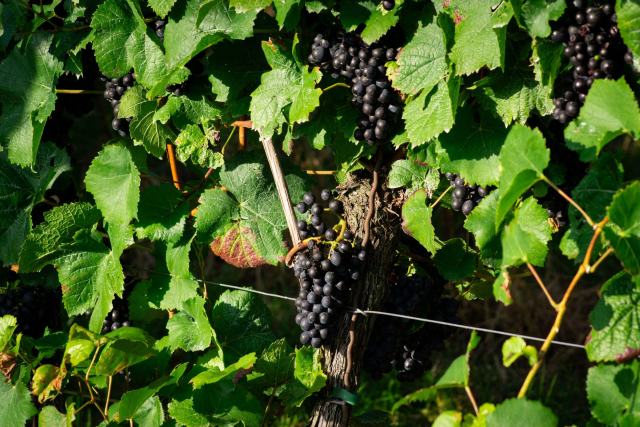
Penfolds is the best-known Australian wine brand and the producer of Grange, the Shiraz that put Australian fine wine on the world map. Its signature is multi-regional blending: parcels from several South Australian regions are assembled into wines whose style stays recognisable from one vintage to the next, from everyday bottles to some of the most collected reds of the New World.
Penfolds is the most recognised wine brand from Australia and enjoys a standing abroad comparable to the great family houses among Italian wine brands. Founded in 1844 by British surgeon Christopher Rawson Penfold and his wife Mary at Magill Estate near Adelaide, the company pioneered multi-regional blending as a philosophy, selecting the best parcels from across South Australia to build wines of consistent character each year. Penfolds is now part of Treasury Wine Estates, yet its winemaking identity, house style and cellar team remain distinct.
On this page
From a Doctor's Tonic to a National Wine House
Penfolds began as a medical venture rather than a commercial one. Christopher Rawson Penfold planted vines at Magill to make fortified wines he recommended to his patients as a tonic, and Mary Penfold took charge of the cellar and the business, steering the company towards the sherry and port styles that dominated the Australian market for decades. The shift to dry red table wine came later, and Magill Estate, at the base of Adelaide's eastern foothills, remains one of the two wineries Penfolds operates today. That long fortified-wine heritage helps explain the house's taste for ripe fruit, generous oak and wines built to last, traits that still define its reds.
Grange: The Shiraz That Changed Australia's Wine Reputation
The flagship Penfolds Grange is a Shiraz, with occasional small additions of Cabernet Sauvignon, that draws on the finest old-vine parcels from Barossa Valley, McLaren Vale and Clare Valley. Conceived by winemaker Max Schubert in the early 1950s after a tour of European cellars, Grange was initially rejected by management; Schubert kept making it in secret until production was officially reinstated in 1960. The 1976 vintage was later awarded 100 points by Robert Parker, a landmark for an Australian red. Its profile is intense and structured: concentrated black fruit, dark chocolate, mocha, American oak vanilla and remarkable tannin grip that softens over 20 to 40 years. Bottles from legendary vintages, 1951, 1955, 1971, 1986, 1990, 1998, 2010 and 2016, trade for thousands of dollars at auction.
Schubert's inspiration came from Bordeaux, where he observed how great wines such as those of Château Haut-Brion were built to age. Applying those ideas to Australian Shiraz, with American oak and fruit from several regions, created a style unlike anything in Europe. The story of the wine being made in secret while production was officially halted has become part of Australian wine folklore.
Why Grange Hermitage Became Plain Grange
Older bottles of Grange carry the name Grange Hermitage, a nod to the Rhône hill whose Syrah inspired many Australian Shiraz makers. The European Union objected to a French place name on a wine made outside France, and Hermitage was dropped from the label with the 1990 vintage. For collectors, the change is a simple dating clue on the label; the wine itself kept the same philosophy. Grange is also the only wine heritage-listed by the South Australian National Trust, a status that reflects its place in the state's cultural history rather than any official quality ranking.
The Penfolds Range: Bin 389, RWT, Yattarna and Beyond
Below Grange, the Penfolds portfolio spans a broad quality range. Bin 389, nicknamed "Baby Grange", blends Cabernet Sauvignon and Shiraz in barrels previously used for Grange, making it one of the world's best-value prestige reds at €50 - €80. RWT (Red Winemaking Trial) is a single-region Barossa Valley Shiraz aged in French rather than American oak. Yattarna Chardonnay represents Penfolds' white wine pinnacle; once drawn from several cool regions, it is now driven primarily by Tasmania, with smaller contributions from mainland vineyards. Together these wines show that the Penfolds philosophy, rigorous selection, confident blending, applies across the entire portfolio.
St Henri, Kalimna and the Wines Below the Icons
St Henri Shiraz follows a different path from Grange: it matures in large old oak vats rather than small new barrels, which gives a more savoury, less oaky style that some drinkers prefer. The Kalimna vineyard in the Barossa Valley lends its name to one of the Bin wines and supplies fruit to several others. At the accessible end, Koonunga Hill and the Max's range, named after Max Schubert, offer the house style at everyday prices, which is how most drinkers first meet Penfolds.
Understanding the Bin Numbers
Many Penfolds wines carry a "Bin" number, originally the identifier of the storage area in the cellar where the wine was kept. The numbers have become brand names in their own right and do not indicate quality on their own: some higher numbers are everyday wines, while others sit near the top of the range. Reading the name of the region and grape varieties on the label, rather than the number, gives a better idea of what is in the bottle.
The first series of Bin reds appeared in the 1960s, when the company introduced Bin 389, Bin 707, Bin 28 and Bin 128, all still produced. Bin 707 is the Cabernet Sauvignon counterpart of Grange, built on the same principle of concentrated fruit and long ageing. Bin 28 is a warm-climate Shiraz associated with the Kalimna vineyard, while Bin 128 comes from the cooler Coonawarra region, which shows in its fresher, more peppery profile. Tasting these side by side is the quickest way to understand how much region shapes Shiraz within a single house style.
How Does Penfolds Compare With Other New World Icons?
Penfolds is often measured against other Australian wine brands such as Henschke, whose Hill of Grace comes from a single vineyard in Eden Valley. The contrast sums up two schools: Henschke champions one site, Penfolds blends regions to reach a house style. Beyond Australia, the annual Penfolds Collection now includes wines from the United States, France and China, which places the house alongside American wine brands on their home ground. Elsewhere in the southern hemisphere, the way Argentine wine brands built the reputation of Malbec follows a comparable path: one grape tied to a national identity, and a few flagship bottles that pull the whole category upward.
Buying and Cellaring Penfolds
Penfolds traditionally releases its premium wines together in an annual collection, which concentrates collector attention and press coverage on a single moment. Older Grange vintages circulate widely on the secondary market, where provenance and storage history matter as much as the vintage itself; the risks are discussed in the guide to counterfeit wine and modern fakes. For the economics behind such prices, see what you really pay for in a bottle, and for a wider perspective on rare wines, the overview of prestige wines and their markets.
Storage conditions weigh more than the label for older bottles. Grange and the top Bin wines need a cool, dark cellar with a stable temperature, bottles lying down so the cork stays moist. Penfolds has long run re-corking clinics in which its winemakers assess older bottles from the premium range, top them up, recork them and certify them, a service that reassures buyers on the secondary market. Before buying, check the fill level, the condition of the capsule and the record of previous owners: a bottle with a clinic certificate or a documented cellar history usually commands a premium over one of unknown origin.